
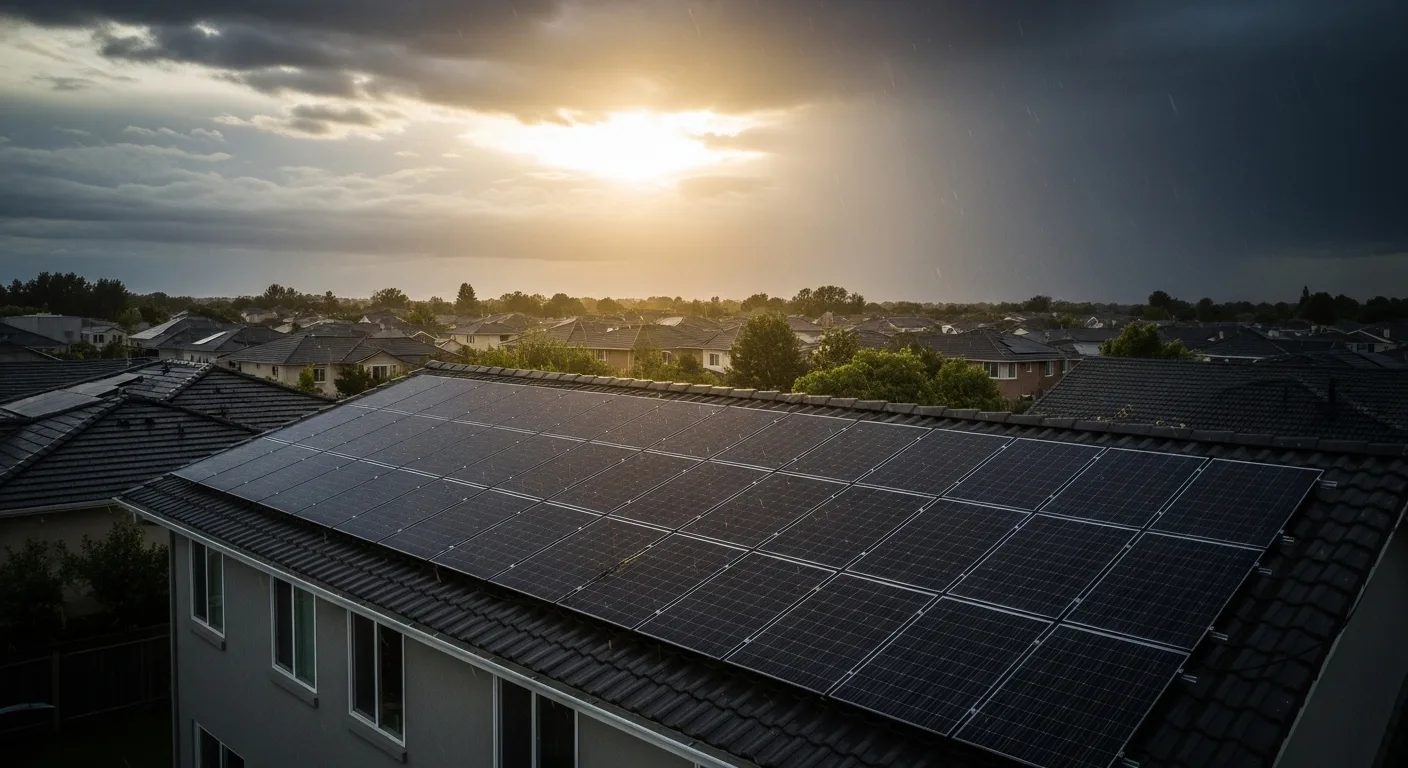
We Advocate On
Your Behalf with
Solar Restoration Intelligence.
To ensure you receive everything you are entitled to under your policy — a new solar system, a new roof, and the tax benefits that come with it.
Most insurance claims are evaluated on individual components.
Solar systems are different.
A solar system is an integrated energy-producing asset consisting of:
We investigate whether your solar system can actually be restored to its pre-loss condition.
Funded by your insurance. Your deductible is your only cost.
What Your Solar Claim Can Deliver
Hail damage to your solar system is not just a loss — in the right hands, it becomes a significant opportunity.
Replacement Projects May Qualify For Additional Tax Incentives
A replacement solar system may qualify for the federal Investment Tax Credit a second time — allowing you to claim this credit again on the new installation where applicable.
Replacement May Require Modern Equivalent Equipment
Solar technology advances rapidly. An insurance-funded replacement means you receive modern, more efficient panels — not a like-for-like swap of aging equipment.
New Roof, Same Claim
If hail damaged your panels, it almost certainly damaged your roof. Both can be included in one claim — resulting in a full roof replacement funded by your insurer.
No New Loan
You went solar to avoid debt. You should not need a new loan to replace a storm-damaged system. Insurance funds the replacement. Your deductible is your only out-of-pocket cost.
Modern Replacement Equipment May Deliver Additional Benefits
Newer panel generations produce more kilowatt-hours per installed watt. Your replacement system will outperform the one it replaces, reducing your utility bill further from day one.
Manufacturer Warranty Reset
A new solar system comes with a fresh manufacturer warranty — typically 25 years. Your old degraded warranty is replaced with full coverage on every component.
No Loan Application Process
When you originally went solar, you may have navigated financing, credit checks, and loan terms. This time, there is no application. The insurance settlement funds the work.
System Modernization
Battery storage, updated inverter technology, and smart monitoring features can often be incorporated into the replacement scope — bringing your system current with today's standards.
Contingency — We Win When You Win
MissionPLC is paid as a percentage of your settlement only. If we do not recover money for you, you owe nothing. Our incentive is fully aligned with yours.
Level the Playing Field
Insurance companies have staff adjusters, engineers, and legal teams working to limit your payout. A licensed Public Adjuster puts equally qualified professionals in your corner.
Storm Damage Changed More Than Your Solar Panels
Your solar system was engineered, permitted, approved, and warranted as a complete energy-producing system.
The wrong question
Can a panel be replaced?
The right question
Can the entire system be restored to the condition that existed before the storm?
That is the question we investigate.
While other claim professionals ask whether a solar panel can be replaced, we ask whether the entire energy-producing system can be restored. In most instances, our experts are able to prove the solar system must be replaced in full — making you whole.
Who Qualifies?
Public Adjusting + Solar Restoration Intelligence
MissionPLC is not only a public adjuster company — we are a public adjusting company that specializes in Solar Restoration Intelligence. We represent commercial and residential solar system owners who have experienced hail, wind, or storm damage in our serviced states.
Our solar field experts assess both the damage and the system to prove that a full replacement is required — a capability that standard claim professionals do not possess.
Timeline Expectations
We set realistic expectations from day one. Here is what you should plan for.
Submission, Review & Inspection
Your claim is submitted, reviewed, and a site inspection is completed.
Typical Processing Window
Negotiation with the insurer, supplemental documentation, and initial settlement offers.
Average Claim Duration
Start to final payout for a standard residential or commercial solar hail claim.
Complex or Disputed Claims
Claims that require appraisal, legal escalation, or involve significant commercial property damage.
The policyholder must be willing and committed to seeing the claim through to its conclusion.
Service Area & Fee Structure
We are licensed to work claims across 24 states. Contingency fees are regulated by state law — the percentages below reflect the contingency fee rates MissionPLC charges in each state.
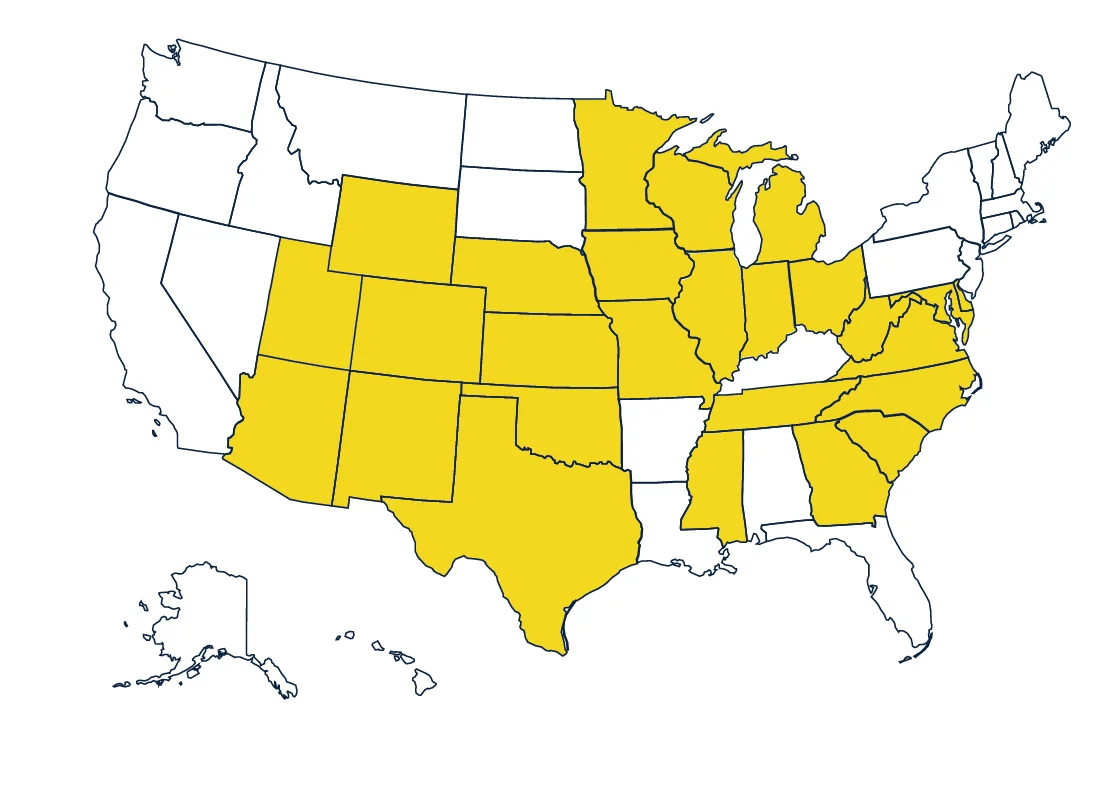
State-by-State Contingency Fees
* In Utah and Nebraska, services are marketed and provided exclusively under the Mission PLC brand.
The fees noted above are subject to change during a declared emergency or declaration of disaster.
Frequently Asked Questions
Answers to what solar owners ask us most before they submit a claim.
MissionPLC works on a contingency fee basis — we only get paid when you receive a settlement. Your primary out-of-pocket cost is your insurance deductible. There are no upfront fees or retainers to us. Depending on your claim, a solar consultant may be engaged to assist with the technical aspects of the claim. Their fee is paid at the end of the claim — not upfront — and most consultants agree to waive their fee entirely if the claim is not successful.
Yes. Hail damage to solar panels is often not visible to the naked eye. Micro-fractures in the cells and anti-reflective coating can cause significant efficiency loss and long-term degradation that only a professional inspection will reveal. Many panels that appear intact have sustained covered damage.
A Public Adjuster (PA) is a licensed claims professional who represents the policyholder — not the insurance company. Insurance companies have their own adjusters whose job is to minimize what they pay out. A PA levels the playing field, documents damage thoroughly, and negotiates the highest legally entitled settlement on your behalf.
In many cases, yes. When a solar system is replaced due to an insurance claim, the replacement system may qualify for the federal Investment Tax Credit (ITC) as a new installation. Eligibility depends on your state and how the replacement is structured. Your solar contractor can walk you through what may apply to your situation.
You can still engage MissionPLC. If you have already filed a claim but are unhappy with the settlement offer, or the process has stalled, we can review your claim, supplement the documentation, and negotiate for an improved outcome. Bring your existing claim estimates and documents when you submit.
Hail is a weather event — not a result of negligence. In most states, filing a hail damage claim is treated differently from other claim types. Rate impact varies by insurer and state. We recommend reviewing your policy or consulting your agent; however, the potential recovery from a legitimate hail claim typically far outweighs any rate adjustment.
Often, yes. Because solar panels are mounted on the roof, a hailstorm severe enough to damage the panels almost always damages the roofing material beneath them. Both can be included in a single insurance claim, potentially resulting in a full roof replacement funded by your insurance payout.
The typical claim processes in 90–120 days. The average claim from start to final settlement is approximately 6 months. Disputed or complex commercial claims can run 12–18 months. We set realistic expectations upfront and keep you informed at every stage.
If a claim has not resolved within 120 days, it may be escalated to a licensed attorney who specializes in insurance disputes. This can trigger the appraisal process or litigation if necessary. This path is at no additional cost to you under our contingency arrangement. We strongly advise that if you are not willing to see the claim through to the end, including escalation with an attorney, then we may choose not to represent you.
We recommend it, but it is not always required. Your MissionPLC claim manager will coordinate the inspection with you and let you know what level of access is needed for your property type.
To begin, you need: (1) a copy of your insurance declarations page, (2) your original solar agreement or contract, and (3) if a claim is already filed, any existing estimates or claim documents. You can upload a PDF document directly in the submission form below.
Yes. Insurance policies have statutes of limitations and filing deadlines — typically 1 to 3 years from the date of loss, depending on your state and policy. Do not wait. The sooner you engage us, the more options remain available to you.
Solar Claims Guides
Why a Licensed Public Insurance Adjuster Is Not Optional for Commercial Property Claims
Commercial property claims are denied or underpaid in 1 out of every 8 cases. Learn what separates a licensed public adjuster from a company or independent adjuster, what UPPA laws prohibit, and the five tactics insurance carriers use to undervalue commercial losses.
Commercial Solar Hail Damage: What Your Insurance Claim and Federal Tax Position Both Depend On
Hail damage to a commercial solar system triggers two simultaneous financial exposures: your insurance claim and your federal tax position. Learn how ITC recapture, bonus depreciation, and RCV coverage interact — and why a licensed public adjuster is essential.
Hail Hit Your Solar Panels? Here's Why You Need a Licensed Public Adjuster
Hail damage accounts for just 1.4% of solar insurance claims yet represents 54% of total solar losses. Learn why these claims are complex and how a licensed public adjuster recovers the full settlement you're entitled to.
Start Your Claim
We advocate on your behalf to ensure you receive everything you are entitled to under your policy.
Have These Documents Ready
- Copy of your Insurance Declarations Page
- Your Original Solar Agreement or Contract
- If a claim is already filed: claim estimates and all related documents